

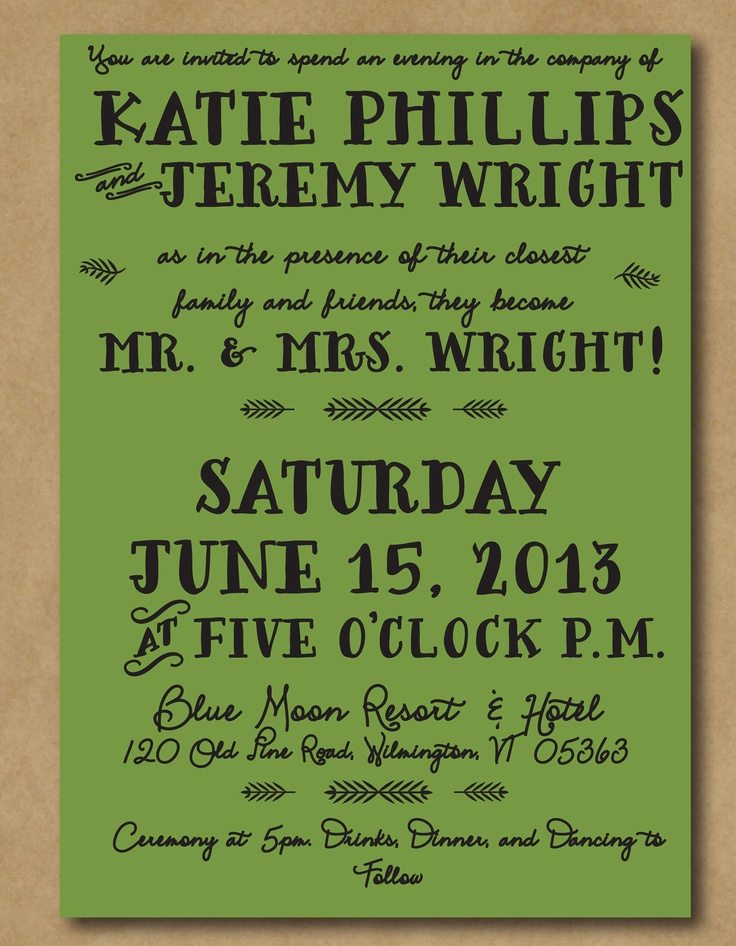
Wedding invitations are far more important than any other invitation you’ll ever stamp and send out. The main objective is the same as others though. It’s to make sure that guests know the who, what, when, and where of the event.
And although wedding invitations are much the same as any other invitation, they are more than just a simple invitation; they offer a visual statement before the guest even reads the words. They convey the formality and tone of your wedding through the formality of the paper, letter font, and style; the more formal your wedding, the more formal the wedding invitations.
Locking Down Your Invitations
This section is a brief overview of invitations and where to get them. 3-5 paragraphs with links to a couple of our affiliated vendors
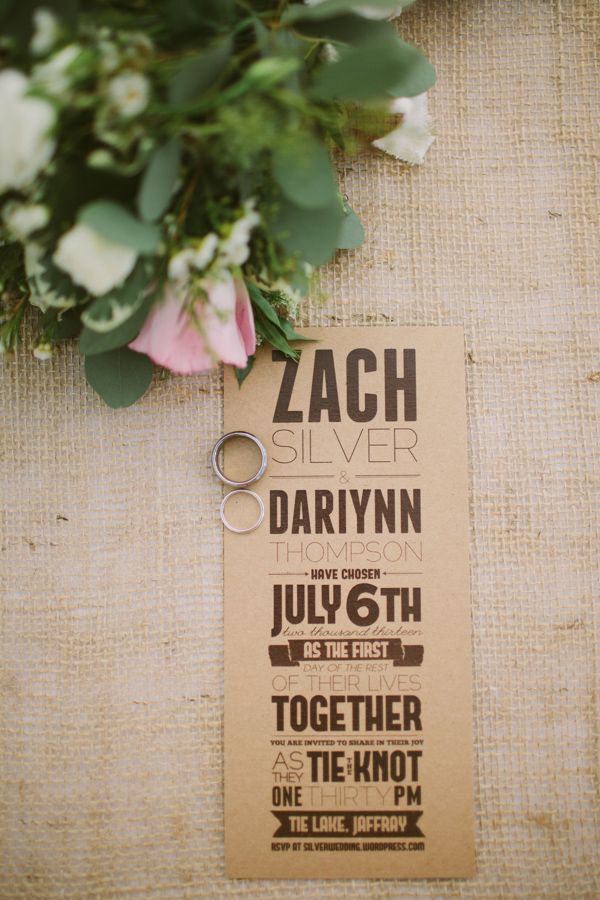
Whether you decide to handmake your own invites or order them from Basic Invite, everything will center around the vision of the day. Incorporate the colors you love and the ethos that inspires you inside the design you choose.
Formal wedding invitations are traditionally printed on heavyweight ivory, cream, or white paper using a classic letter style. These are usually engraved and written in the third person style.
But you have some wiggle room, informal weddings don’t have as many “rules” to follow, but no matter what, pick invitations that speak to your couple style! Minted has an extraordinary collection of designs to peek at as well.
A General Guide on How to Word Your Wedding Invitations
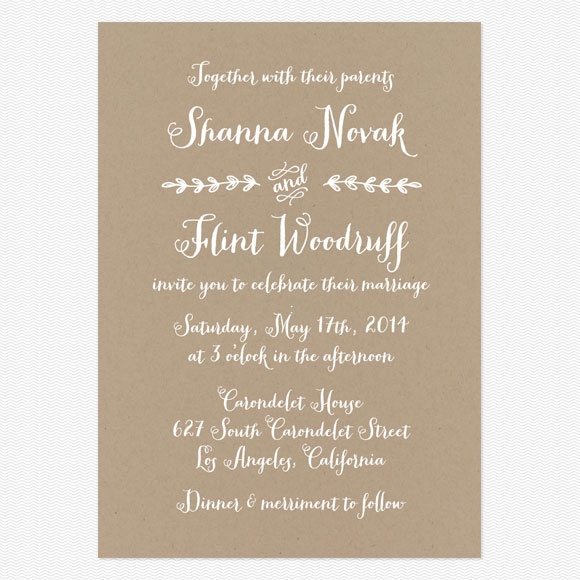
How to word wedding invitations is often one of the most stressful parts of planning a wedding. It doesn’t have to be, however! Your invites are communicating the necessary info to your friends and loved ones, so keep this in mind and read on for a few tips and tricks!
The invitation must include the names of the hosts at the top of the invite, and feature the name of the bride and groom, names of the hosts (usually the bride’s parents), ceremony date, day of week, time and location. The word “and” between two names generally indicates two people are married (like the aforementioned parents) while the names of unmarried individuals, such as you and your groom, are stacked.
The wording on your invitation should correspond with the formality and style of your wedding. From formal to casual, the wording should reflect the formality and tone you’d like to set. Every wedding invitation should include these elements: host{s}, couple getting married, time, date and location. Be inspired! Choose wording that complements your situation, style and spirit of your wedding.
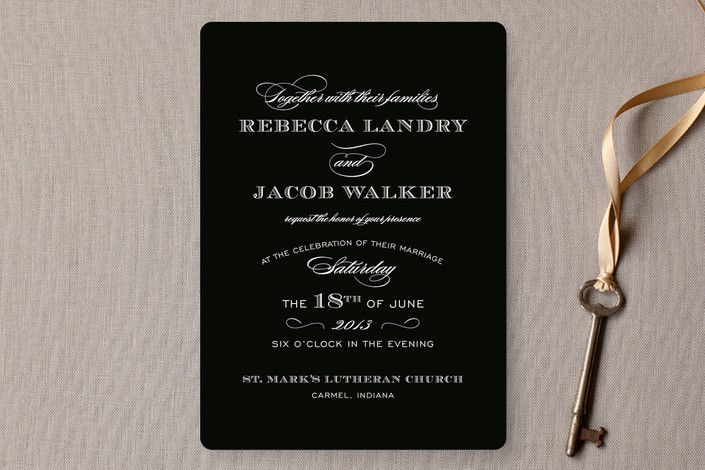
Check with your officiant for style specifics but traditionally—if a couple marries in a house of worship, the request line wording reads “request the honor”. Words, dates and numbers are typically spelled out, and the only abbreviations are Mr. and Mrs. Punctuation is typically found only in the time, date or in the location. If the bride’s parents are hosting and the daughter shares their last name, it can be omitted from the invitation.
Traditional Style: Bride’s Parents Hosting
Doctor and Mrs. James Walker
request the honour of your presence
at the marriage of their daughter
Cheryl Rae Walker
to
Mr. Timothy Earle Jones
etc.
Bride’s Parents Are Hosting (With Groom’s Parents Included)
Mr. and Mrs. James Walker
request the honour of your presence
at the marriage of their daughter
Cheryl Rae Walker
to
Mr. Timothy Earle Jones
son of Mr. and Mrs. Carroll Jones
etc.
Bride & Groom’s Parents Are Hosting Together
Mr. and Mrs. James Walker
and
Mr. and Mrs. Carroll Jones
request the honour of your presence
at the marriage of
Cheryl Rae Walker
to
Mr. Timothy Earle Jones
etc.
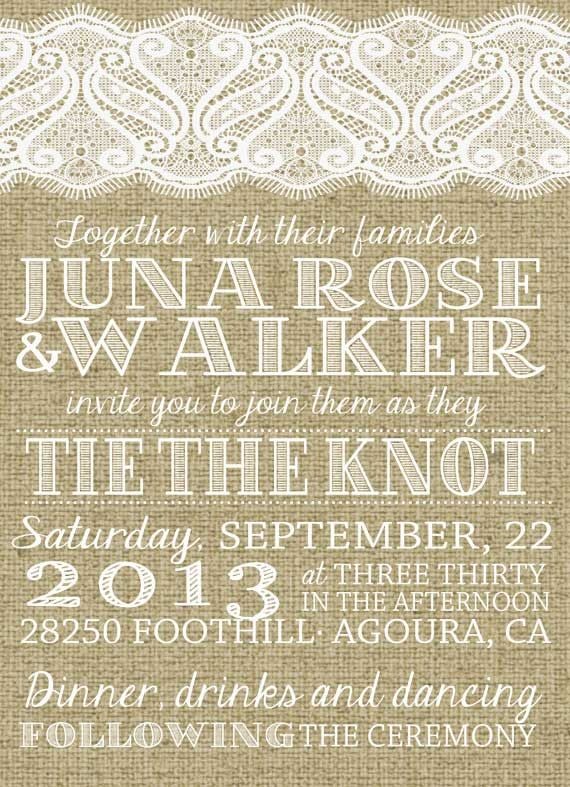
Honoring a Deceased Parent
Mrs. James Walker
requests the honour of your presence
at the marriage of her daughter
Cheryl Rae Walker
also daughter of the late Mr. James Walker
to
Mr. Timothy Earle Jones
son of Mr. and Mrs. Carroll Jones or
(son of Mr. Carroll Jones and the late Mrs. Jane Jones)
etc.
Or,
Cheryl Rae Walker
daughter of Mr. and Mrs. James Walker
(or daughter of Mrs. Sharon Walker and the late Mr. James Walker)
and
Mr. Timothy Earle Jones
son of Mr. and Mrs. Carroll Jones
(or son of Mr. Carroll Jones and the late Mrs. Jane Jones)
request the honour of your presence
etc.
Bride’s Stepfather is Hosting (Along With Mother)
Mr. and Mrs. James Walker
request the honour of your presence
at the marriage of her daughter
Cheryl Rae Stone
to
Mr. Timothy Earle Jones
etc.
Note: If her stepmother were hosting with her father, “at the marriage of ‘her’ daughter would be changed to ‘his’ daughter’’.

Couple Issuing the Invitation While Honoring Their Parents
Cheryl Rae Walker
daughter of Mr. and Mrs. James Walker
and
Mr. Timothy Earle Jones
son of Mr. and Mrs. Carroll Jones
request the honour of your presence
etc.
E-mail Wedding Invitations
Dear John and Kathy,
Timothy Jones and I will be married on March 4, at three o’clock at our home, with a buffet reception following the ceremony. Please come and celebrate with us.
Warm regards,
Cheryl Walker
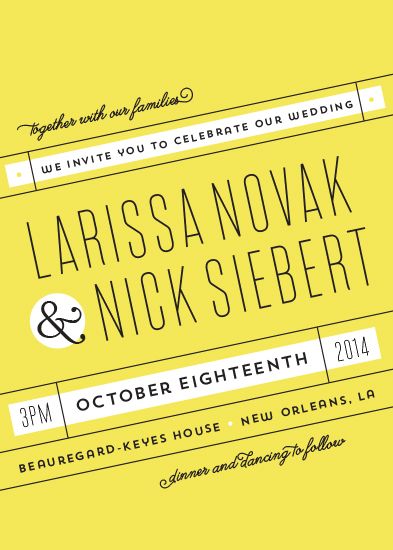
Response Cards
Did you know that a reply card is relatively new and is optional? Yes it is. Actually, a formally handwritten guest’s reply letter was the most common way a guest would reply years ago. For expediency and convenience we now include response cards in nearly all invitations. Plus, unfortunately many people have lost the art of writing a formal response letter today. In the past, it was considered impolite to assume your guest didn’t know how to write one. Now we assume that our guest doesn’t.
Some guests may forget to write their names on the response card. In order to keep track of who responds and who does not, make a list of your guests with a number assigned to each name. Mark the corresponding number in pencil on the back of each response card. You will know quickly who has and has not replied.
If you choose not to use a reply card, which is also known as a RSVP card, you would simply send a small card with your RSVP information stating, “The favour of a reply is requested by June 20, 2005,” or write it on your reception invitation. A formal response should be returned to the bride on the guest’s personal stationery.
Note : Place a stamp on the response card envelope before assembling the invitations and placing them into the envelopes.
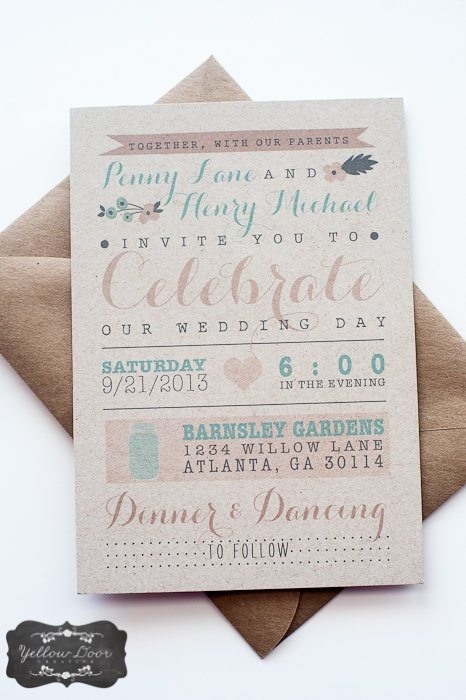
More Wedding Invitation Resources
See our list of top sites for buying Wedding Invitations


